
Best Time to See Manta Rays in Nusa Penida: Seasons and Conditions
Journal / Seasons & conditions · 5 minute read
The best time to see manta rays in Nusa Penida is not a single month you can circle on a calendar. Mantas have been documented here throughout the year, while access to the snorkeling sites depends on the sea conditions on your day. Choosing when to visit means weighing both.
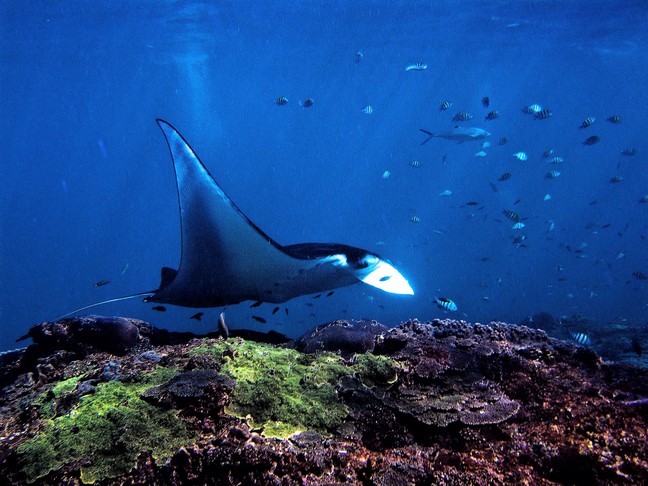
Three different questions behind “the best time”
Are mantas present?
Year-round presence in the area does not mean animals will be at your stop while you are there.
Can the boat visit?
The route depends on the day’s sea conditions and the crew’s assessment.
Does the trip suit you?
Your starting island, confidence in the water and flexibility all shape the day.
Is there a Nusa Penida manta ray season?
A study published in 2019, using observations from January 2012 to April 2018, documented reef manta rays throughout the year in the Nusa Penida Marine Protected Area. Researchers found repeated use of Manta Bay and Manta Point, with different patterns at the two sites.
The paper also describes a peak in reported sightings at Manta Point during April–May, associated with reproductive activity. That is a historical, site-specific observation—not a prediction for your booking, and not a reason to apply the same peak to Manta Bay. Read the original Nusa Penida manta research.
For visitors, the useful conclusion is that there is no short annual window outside which mantas simply disappear. We do not assign monthly sighting percentages in this guide because we do not have a verified trip-by-trip dataset to support them.
Our regular tour plans to visit Manta Bay. Manta Point is available by private request, subject to confirmation and conditions. Our Manta Bay vs Manta Point guide explains the difference before you choose a trip.
Dry season and rainy season: how to plan
Indonesia Tourism’s climate guide broadly places Bali’s dry season in April–October and its wet season in November–March. These are general climate patterns; the start and end of the seasons vary, and a seasonal label is not a forecast for your dates.
April–October: broadly drier
A useful starting point if you want to organise an island holiday around the generally drier part of the year.
Still check the marine outlook. Less rain does not, by itself, establish that an exposed snorkeling stop is suitable.
November–March: broadly wetter
Rainy-season travel does not automatically rule out manta snorkeling. Keep your plans flexible and confirm the trip closer to departure.
Do not assume that a dry morning means every boat crossing and snorkeling stop can operate as planned.
If your dates are already fixed, focus on the arrangements you can still choose: where to stay, how much time to allow and whether your schedule can accommodate a change. A month-by-month wildlife ranking would imply more certainty than the evidence supports.
Manta snorkeling: January to December
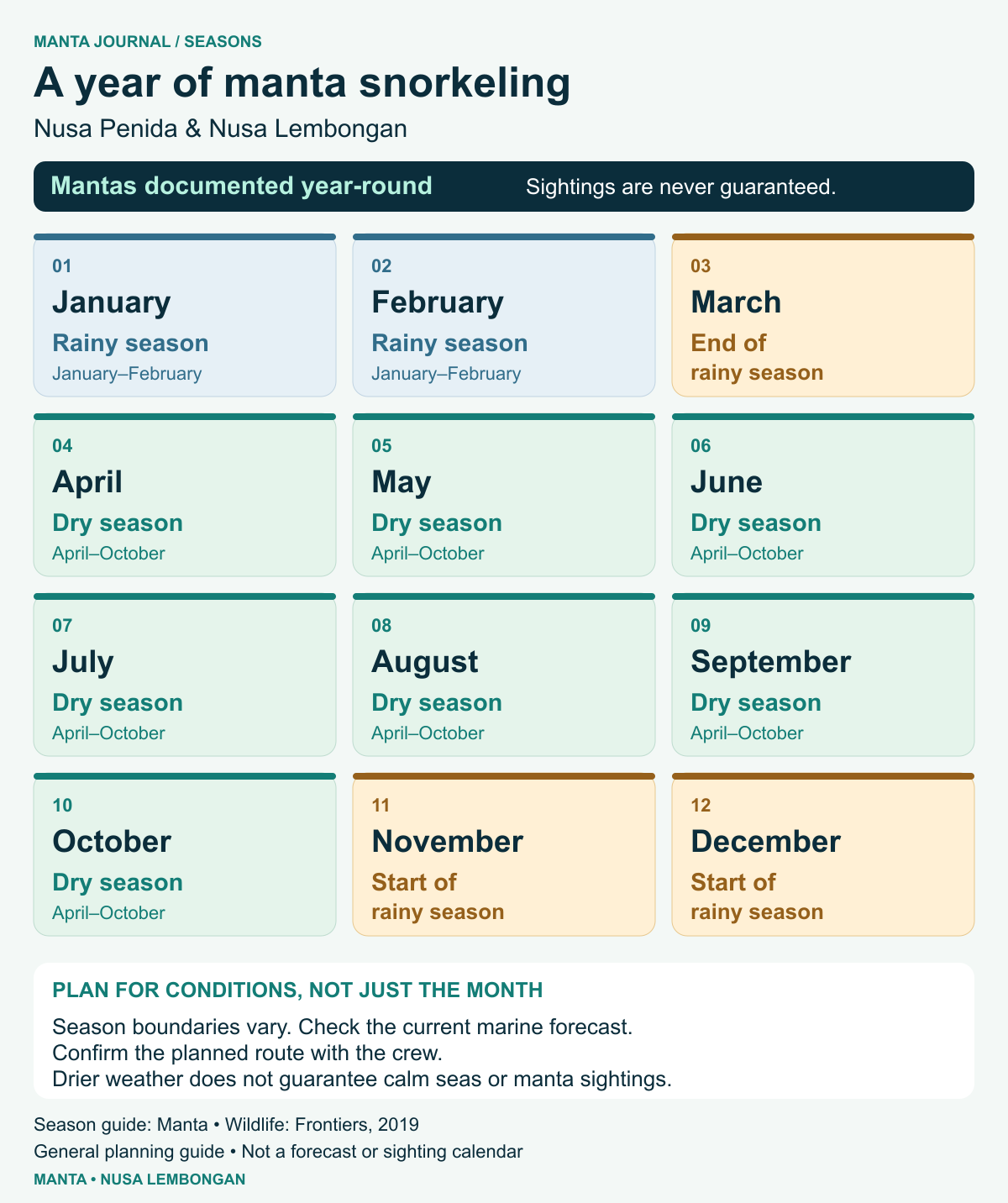
Check sea conditions, not just the rain icon
For a current regional overview, consult BMKG’s Badung Strait marine forecast. It includes wind, waves and currents, together with a stated validity period. Make sure the forecast covers your travel date; a saved screenshot from another day can be misleading.
Use that information as context for a conversation with the operator. A regional forecast cannot determine conditions at every snorkeling site, and this guide does not provide a wave-height threshold for deciding whether a trip should run.
Ask the team whether the planned manta stop is expected to be accessible, whether the route may change and what arrangements apply if the trip cannot proceed. Follow the crew’s briefing and decisions on the day.
Planning around school holidays? Read our guide to snorkeling in Nusa Lembongan with kids for the equipment, supervision and boat arrangements to confirm alongside the day’s conditions.
Is morning the best time for manta sightings?
Our regular Lembongan tour has a scheduled morning departure. That is an itinerary choice, not proof that a particular hour guarantees more mantas. We do not have a verified hourly sightings record that would justify naming a universal best time of day.
If you are coming from Bali, allow for the crossing and the separate day-trip arrangements. Read our comparison of Lembongan departures and Bali day trips to understand the complete journey before choosing your date.
How many nights should you allow?
If snorkeling is a priority, consider staying on Lembongan and leaving some flexibility around your preferred day. An overnight stay removes the need to make the Bali crossing that morning; extra time may give you more scheduling options if availability and conditions allow.
That flexibility does not guarantee another departure, a free replacement trip or a manta encounter. Confirm availability and change or cancellation terms before committing to accommodation or activities.
For visitors planning a longer island stay, our related business Isla Indah Retreat offers an Ocean Explorer retreat built around ocean activities and time on the island. Ask the retreat team to confirm the accommodation, snorkeling arrangements and inclusions for your dates. It is a separate holiday option, not an inclusion in the regular Manta tour.
What if the manta stop changes?
A planned route is not a promise that every location will be accessible. Our regular itinerary includes Manta Bay, Crystal Bay and Mangrove reef, subject to conditions. The team can explain the proposed alternatives when a stop changes.
Reef snorkeling can still be part of a rewarding day, but an alternative stop should not be described as an equivalent chance of seeing mantas. If visiting a particular location is essential to you, raise that before booking and read the applicable terms.
Make the encounter respectful, whenever you visit
When a manta appears, give it space and keep its route clear. Avoid touching or chasing it, and follow the crew’s instructions. The Manta Trust’s encounter guidelines explain how swimmers can reduce disturbance. Choosing a date is only one part of planning; how we behave in the water matters too.
Your pre-booking checklist
- Share your preferred date, starting island and hotel location.
- Explain your group’s swimming confidence and any concerns about the boat journey.
- Confirm the planned manta site and how route changes are handled.
- Check the current marine outlook near departure, then follow the operator’s advice.
- Read the cancellation terms and leave room around onward travel.
Plan around your dates
Tell our team when you will be in Bali or Lembongan, where you are staying and what matters most to your group. We can discuss the planned trip and availability.
Ask about your snorkeling dates →Sources checked: 6 November 2026. Research findings are historical; weather forecasts and trip arrangements should be checked for your travel dates.