
Manta Bay vs Manta Point: What’s the Difference for Snorkeling?
Journal / The snorkeling spots · 5 minute read
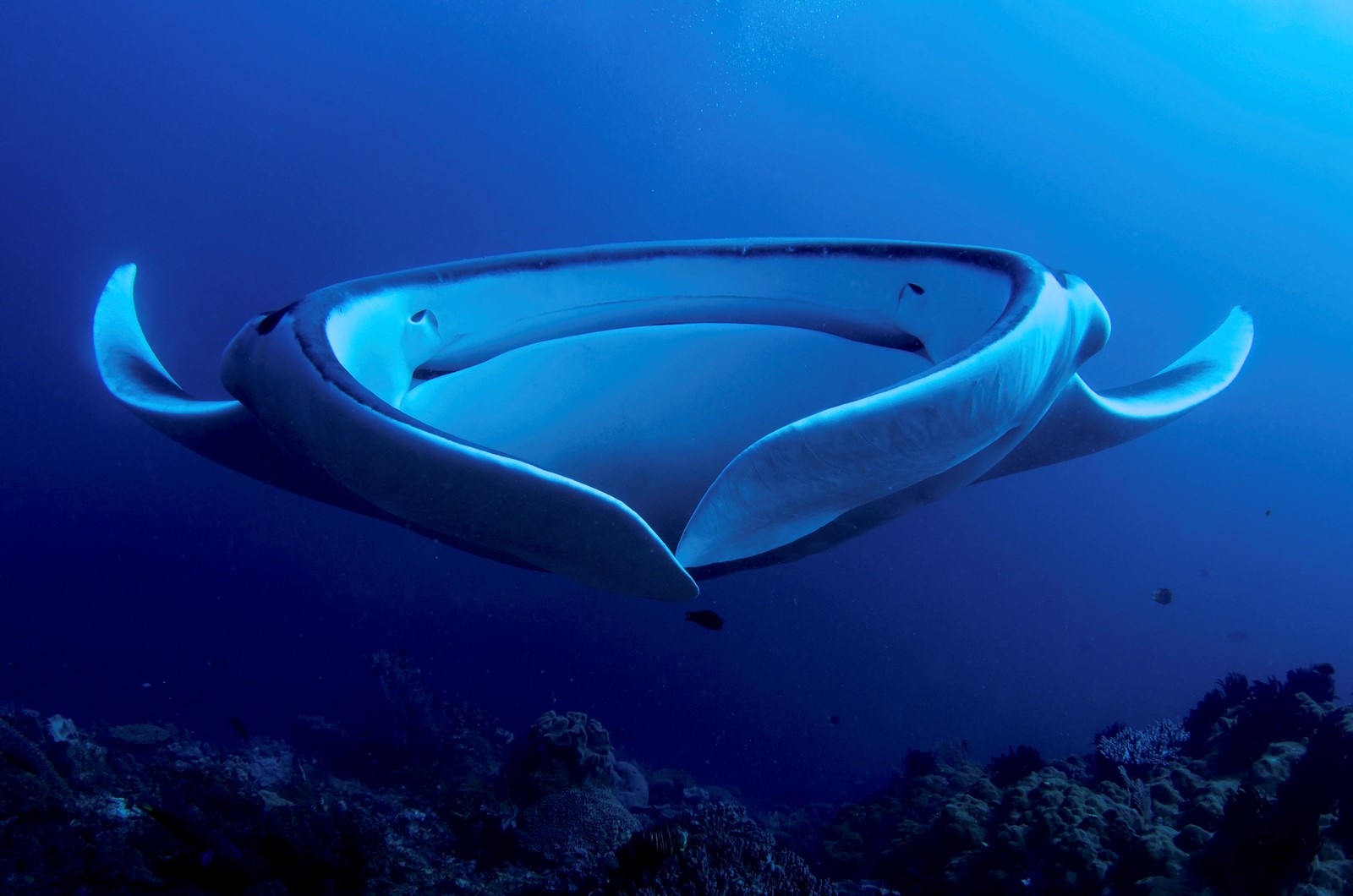
Manta rays are wild animals. Every encounter is different.
Planning to go snorkeling with manta rays in Nusa Penida? You’ll probably come across two names: Manta Bay and Manta Point. They are separate locations, and understanding the difference will help you choose your trip.
Both are off Nusa Penida, even when your boat departs from neighbouring Nusa Lembongan. Research has identified different patterns of manta activity at the two sites: feeding is particularly important at Manta Bay, while Manta Point is associated with cleaning and courtship.
Manta Bay vs Manta Point at a glance
| What to compare | Manta Bay | Manta Point |
|---|---|---|
| Location | Off Nusa Penida | A separate site off Nusa Penida |
| Documented manta activity | Feeding, particularly among younger mantas | Cleaning, social activity and courtship |
| Research findings | Evidence of a potential nursery habitat | Greater use by mature mantas |
| Our trip options | Planned stop on the regular snorkeling tour | Available by private-boat request |
| Chances of sighting | High | Very High |
Sighting chances are general guidance, not a guarantee. Manta rays are wild animals, and sightings vary with conditions and their movements.
The biological comparison reflects a study published in 2019 using observations collected between 2012 and 2018. It explains the importance of these habitats; it does not predict what you will see on a particular trip. Read the original research in Frontiers in Marine Science.
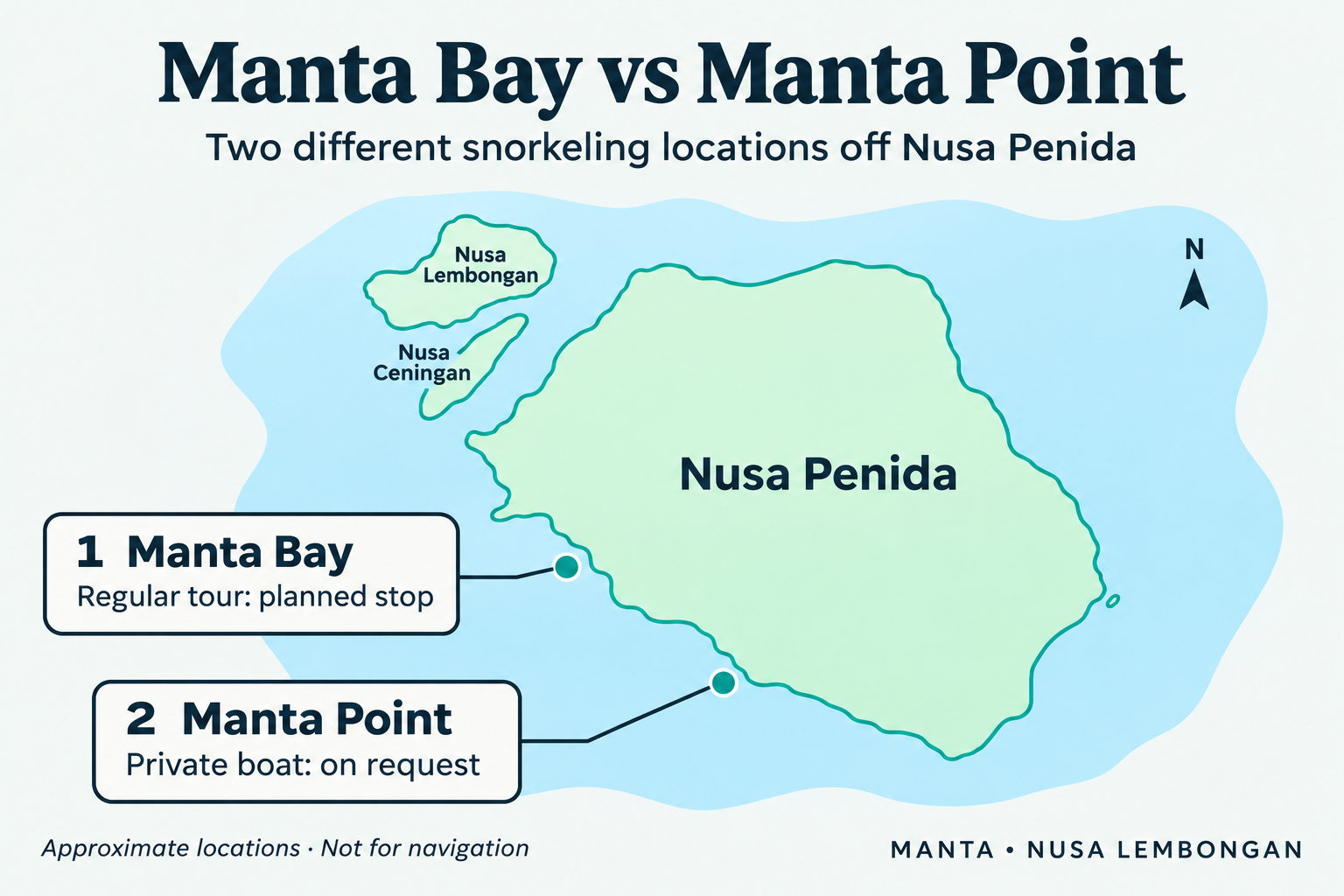
Where are Manta Bay and Manta Point?
Manta Bay lies off western Nusa Penida. Manta Point is farther southeast along the island’s southern coast. Both sites are off Nusa Penida, even when your boat departs from Nusa Lembongan.
What makes Manta Bay special?
Manta Bay is an important feeding area for reef manta rays. Researchers recorded repeated visits by young mantas, including juvenile males, providing evidence that the area may form part of a nursery habitat.
That gives a Manta Bay snorkeling trip a wider significance: visitors are entering a place that matters to the animals’ development and daily lives. Giving mantas space allows them to continue their natural behaviour.
Explore our Manta Bay snorkeling page for more about this stop.
What is different about Manta Point?
Manta Point is known for its cleaning stations: areas where small fish remove parasites and dead skin from visiting mantas. Researchers also documented social and courtship behaviour here, with mature animals using the site. The Marine Megafauna Foundation’s explanation of Manta Bay and Manta Point describes why each habitat matters.
A cleaning station is a natural habitat, not a feeding attraction maintained for visitors. Whether mantas visit while you are there remains outside anyone’s control.
For visitors interested specifically in Manta Point snorkeling, the practical distinction is the itinerary. A booking for Manta Bay does not automatically include Manta Point.
Which site does our snorkeling tour visit?
Our regular trip from Nusa Lembongan plans to visit Manta Bay, alongside Crystal Bay and the Mangrove reef.
The route remains subject to sea conditions. A planned stop may need to change, and a visit to a manta site does not guarantee a sighting.
If Manta Point is your priority, tell our reservations team before booking. Our sister activity website, Lembongan Snorkel Co., has a private snorkeling boat option through which you can request Manta Point. The team must confirm the route, availability and any additional charge.
Which is better for your trip?
For a shared snorkeling outing following our regular route, Manta Bay is the planned manta stop. It suits visitors who want to include a manta-watching opportunity within a wider reef-snorkeling trip.
If visiting Manta Point specifically matters to you, a private-boat enquiry is the appropriate starting point. Explain your preferred location and dates so the team can assess the request.
We recommend choosing around the complete day: your departure point, group’s needs, itinerary and budget. A different site name or a more expensive boat arrangement does not promise a better wildlife encounter.
Still deciding where to start? Compare snorkeling from Lembongan and a Bali day trip, including transfers, timings and overnight options.
Choosing your dates? Read our guide to the best time to see manta rays in Nusa Penida for the seasonal patterns and sea conditions that can affect your trip.
For families and first-time snorkelers, share everyone’s swimming confidence before booking. The suitability of a trip depends on the arrangements and conditions, not simply whether the destination is called a “bay” or a “point.”
Travelling with children? Our guide to snorkeling in Nusa Lembongan with kids covers supervision, equipment fit and the questions to ask before booking.
How to enjoy a respectful manta encounter
Watching a manta pass without changing its behaviour is part of what makes the experience memorable. Give it space and resist the temptation to follow for another photograph.
The Manta Trust’s encounter guidelines recommend entering the water calmly, keeping your distance, leaving the animal’s path clear, and avoiding touching or chasing. Its guidance specifies entering at least 10 metres away and not approaching within 3 metres. Follow the crew’s briefing and any additional local requirements.
Keep those principles in mind at either location. A camera should help you remember the encounter without becoming a reason to crowd the animal.
Plan your manta snorkeling trip
Joining the regular trip? Manta Bay is our planned manta stop. Hoping to visit Manta Point? Mention that when enquiring about a private boat.
Share your dates, starting island and group details so our team can confirm the arrangements.
View snorkeling options →